Understanding ISO Corner Castings: Size and Strength
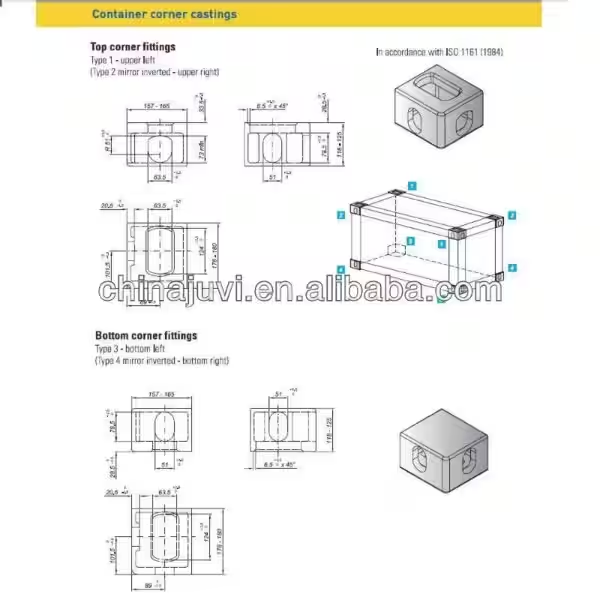
The seemingly simple ISO corner castings, those robust steel blocks found at the corners of shipping containers, are crucial components in the global logistics network. Their precise ISO corner dimensions are not arbitrary; they are meticulously defined by international standards to ensure compatibility and safety across diverse transportation modes. These castings, typically made from cast steel, endure immense stress during handling, transit, and stacking, making their dimensions and material properties critical for the structural integrity of the entire container.
Ignoring the specified ISO corner dimensions can have severe consequences. Inaccurate dimensions can lead to incompatibility with lifting equipment, resulting in container damage, cargo loss, and potential injury. The standardization of these dimensions allows for seamless integration with cranes, forklifts, and other handling machinery across continents, streamlining the global supply chain. Consider a scenario where a container’s corner casting is slightly off-spec: the lifting mechanism might not engage correctly, potentially leading to a catastrophic failure. This underscores the critical role of precise ISO corner dimensions in maintaining safety and efficiency.
Why Cast Steel Reigns Supreme: A Material Deep Dive
Strength and Durability: The Defining Factors
The choice of cast steel for ISO corner castings is not accidental. While lighter materials like aluminum might seem appealing, the stringent demands of global shipping require the superior strength and durability offered by cast steel. Cast steel exhibits exceptional tensile strength, capable of withstanding the immense forces exerted during stacking, lifting, and transportation. This ensures the container’s structural integrity, protecting the valuable cargo within. The material’s inherent hardness enhances its resistance to wear and tear, extending its lifespan and reducing replacement costs over time.
The ISO corner dimensions, in conjunction with the material properties of cast steel, create a robust system for handling containers. The design itself, coupled with the material’s strength and resilience, ensures that the container can withstand the rigors of various transportation methods. Consider a journey where a container is transported by ship, train, and truck: the corner castings are subjected to vibrations, impacts, and other stresses throughout. The strength of cast steel is essential to withstand these forces and prevent damage.
Cast Steel vs. Aluminum: A Comparative Analysis
While aluminum offers advantages like corrosion resistance and lighter weight, cast steel remains the preferred material for ISO corner castings due to its superior strength-to-weight ratio. While certain aluminum alloys boast impressive strength, they often fall short of cast steel’s ability to withstand the extreme loads encountered during shipping. A direct comparison highlights this: while aluminum might be lighter, resulting in fuel savings, the potential for failure due to lower tensile strength outweighs this benefit in the context of global shipping, where safety and cargo security are paramount.
The cost-effectiveness of cast steel further solidifies its position. Though aluminum’s corrosion resistance reduces maintenance costs in certain environments, the upfront cost of high-strength aluminum alloys exceeds that of cast steel, making the latter a more economically viable option, especially considering the long lifespan of a well-designed and manufactured corner casting. The balance between cost, strength, and longevity makes cast steel the optimal choice for an application as demanding as ISO shipping containers.
ISO 1161: The Standard that Sets the Benchmarks
Decoding ISO 1161:2016 and its Significance
The ISO 1161:2016 standard meticulously defines the specifications for corner castings, including the crucial ISO corner dimensions. This standard isn’t just a suggestion; it’s a critical document that ensures interoperability and safety across the global shipping industry. Adherence to ISO 1161:2016 is non-negotiable for any manufacturer aiming to supply corner castings for international shipping. The standard covers everything from material requirements to dimensional tolerances, guaranteeing consistent quality and performance.
The precise ISO corner dimensions specified in ISO 1161:2016 are not arbitrary. They are carefully calculated to ensure compatibility with various lifting mechanisms and structural elements of shipping containers. Deviations from these dimensions can compromise the structural integrity of the container, potentially leading to accidents or cargo damage. Furthermore, the standard details testing procedures that verify the strength and durability of the castings, ensuring they meet the rigorous demands placed upon them.
Certified Castings: Ensuring Quality and Safety
Obtaining ISO 1161 certification is not merely a formality; it’s a testament to a manufacturer’s commitment to quality and safety. This certification process involves rigorous testing and inspection to verify that the castings meet the specified standards, guaranteeing that the ISO corner dimensions are accurate and the materials used are of the highest quality. Choosing certified castings ensures that the containers are built to withstand the rigors of international transport and minimizes the risk of accidents or cargo loss.
The implications of using uncertified castings are significant. A lack of certification indicates a potential compromise in quality or a deviation from the specified ISO corner dimensions, leading to risks that can range from minor inconveniences to catastrophic failures. The consequences of using substandard castings can include container damage, cargo loss, and even injury to personnel handling the containers. Therefore, opting for ISO 1161-certified castings is a crucial investment in safety and reliability.
Selecting and Installing ISO Corner Castings: Best Practices
The selection and installation of ISO corner castings require careful consideration to ensure optimal performance and longevity. Choosing a reputable supplier who adheres strictly to the ISO 1161 standard is paramount. This ensures that the castings meet the specified ISO corner dimensions and material requirements. The supplier should provide certification to prove compliance with the standard. For example, a supplier might provide detailed dimensional drawings and material test reports to verify the quality of their products.
Proper installation is just as crucial as selecting high-quality castings. Welding is the most common method for attaching the castings to the container frame. The welding process must be performed by qualified personnel to ensure a strong and reliable connection. Incorrect welding techniques can compromise the structural integrity of the container, negating the benefits of using high-quality, precisely dimensioned castings. Therefore, meticulous attention to both selection and installation is crucial for maximizing safety and efficiency in shipping container construction.
Vanlige spørsmål og svar om ISO corner dimensions
Hva er standarddimensjonene for ISO 1161 hjørnebeslag?
178mm x 162mm x 118mm
Hvor store er hullene i ISO 1161 hjørnebeslag?
Generelt 2-3 tommer i diameter, men variasjoner kan forekomme.
ISO 7093: En Dybdeanalyse av Standardiserte Flate Skiver Forstå ISO 7093 Standarden ISO 7093 definerer spesifikasjonene for standardiserte flate skiver ...